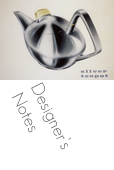
Bringing the folio collection into groupings allows the distinctive visual character of each phase of creative activity to be more closely aligned — even though the items themselves might vary in their functional role. A theme or technique can then be identified and explored in greater detail.
Introduction
Bringing the folio collection into groupings allows the distinctive visual character of each phase of creative activity to be more closely aligned — even though the items themselves might vary in their functional role. A theme or technique can then be identified and explored in greater detail.
This experience will also reflect the way the designer has developed a specific theme over a period of years. There is also a recognition of how a technique from one section of the folio can be modified and transformed — so providing a stimulus for a new design concept. The cut and overlap grouping is an example of this process as it has directly evolved from the earlier curvilinear technique. In contrast, the flowing water section illustrates how such a theme might dominate and create a singular expressive imagery — but one which also has the potential to be extended and applied to a much wider range of design opportunities.
Cut and overlap is a concept which has evolved from experiments in piercing fine slits into the edge of a flat piece of metal in a series of closely spaced, 'pleat' like curvilinear configurations.
These cut-sections are manipulated and progressively overlapped to create a new contour on the surface of the original metal shape. When soldered, the overlapping sections reveal and sharply define a completely new three dimensional visual experience in silver form.
show details

Pair of Platter/Bowl Forms

'FIT FOR PURPOSE'

CBS Exhibition 'Side X Side Edge to Edge'

Silver, 2007

Silver, 2012

Silver, 2009

Silver plated, 2004

Silver, 2004

Silver, 2004

Silver, 2006
Interpretations of the flowing action of liquids when poured from a vessel or container such as a jug, beaker or flagon. These flowing forces – in part imagined, but also directly observed, are initially captured in freely drawn sketches and then further developed into models in paper, card or wood.
The actual realisation in silver creates a range of vessels with sharply modelled curvilinear lines which echo and emphasise the dynamic quality of the flowing liquid. These lines – flowing in a progressive formation towards a spout or lip, define the essence of the concept and are built up section by section from seperate silver elements. The surface detailing and textural quality of the design evolves in a natural manner, directly from the construction process.
show details

Curvilinear Teapot and Related Jug and Bowl

Large Water Jug

A pair of related flasks

Silver, 2010

Silver, 2008

Silver, 2007

Silver, 2007

Silver, 2004

, 2002

Silver, 2001
The vibrancy of rivers, rapids and cascades and the fluidity of water in its many moods are the collective inspiration for these experimental pieces of modern domestic silverwork.
Candelabra, bowls, vessels and other containers are created by a combination of raising, fabrication and forging techniques which impart a flowing dynamic quality to each piece. This is essentially a sculptural approach – the shaping of a tactile entity by the manipulation of light, form, plane and texture – which is balanced by a regard for practicality. Ultimately these factors are brought together into one piece of distinctive and functional silverware.
show details

Bowl 'Wave Ten'

Candelabra with Seven Sconces

Circular Dish Form

Silver, 2006

Silver, 2006

Silver, 2009

Silver, 2008

Silver, 2002

Silver plated, 2013
Functionality and fluidity of line
A collection of silver forms for the table where handling qualities are enhanced and given a specific visual and tactile role within the design concept.
The aim is to create a unity of form in the design of a single vessel. Spouts are designed to flow smoothly from the body shape and handles are configured to spring out in a positive and elegant manner. These individual elements should reflect their functional roles but must also contribute to a fused aesthetic totality.
show details

A pair of related flagons

Water Jug

A pair of Cuneiform Jugs

Silver, 2002

Silver, 2003

Silver, 2005

Silver, 2002

Silver, 1999

Silver, 1998

Silver, 1996
A range of spoons and scoops with design detailing which echoes and compliments the functional and aesthetic approach of the silverware in the fluidity of line group.
show details

Six long stem spoons

Six Spoons / Scoops

Silver, 2010

Silver, 2010